Member Content
Innovation in Rural & Regional Markets: The AIRRAQ Network Story

By Maureen McCabe Moore, Senior Vice President & Chief Customer Experience Officer
GCI
Chair, CCA Board of Directors
When we talk about innovation in rural and regional markets, it’s easy to picture cutting-edge technology. But in Alaska, innovation often means something deeper: creating equitable access to opportunity and building resilience in communities that face unique challenges. For the Yukon-Kuskokwim Delta, a vast region of tundra and rivers in Western Alaska, that innovation arrived in the form of fiber-optic connectivity through the AIRRAQ Network.
In December 2025, GCI and our partner, Bethel Native Corporation (BNC), completed the first phase of this ambitious project. It’s a milestone worth celebrating – not just because of the engineering feat it represents, but because of what it means for the people who call this region home.
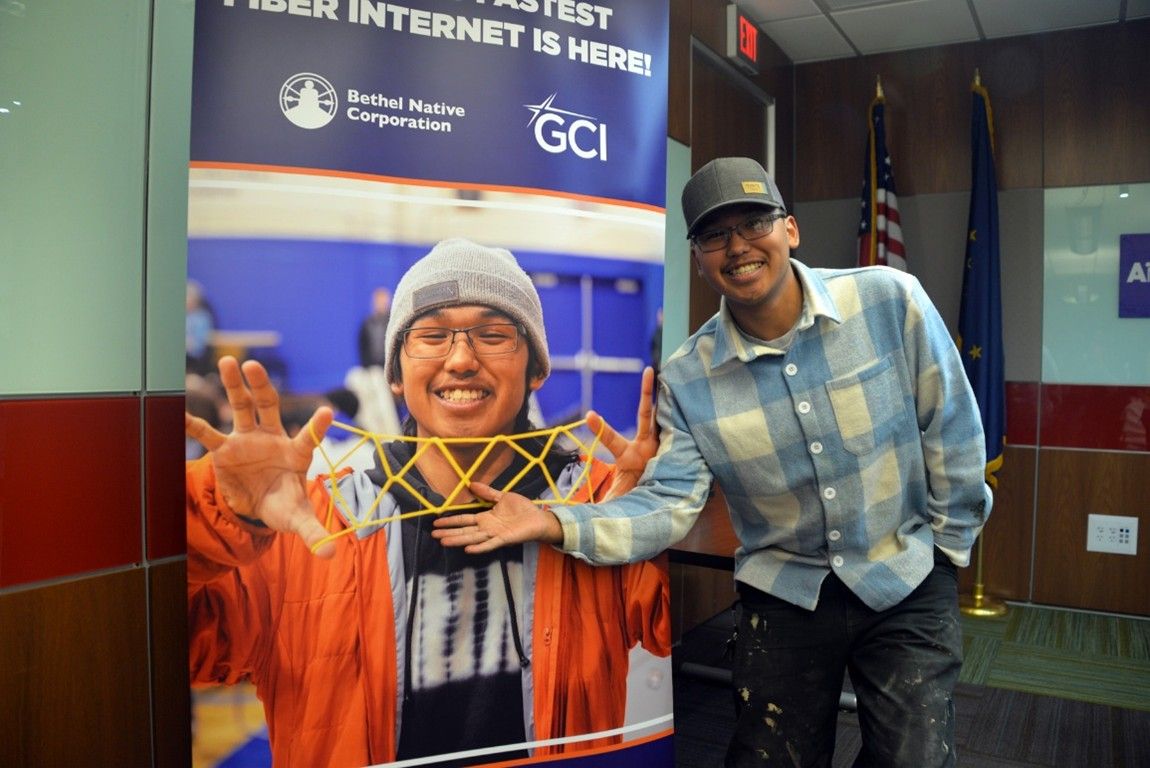
The AIRRAQ Network (pronounced EYE-huck) is named after a traditional Yup’ik game similar to cat’s cradle and translates to “string that tells the story.”
Closing the Digital Divide, One Fiber at a Time
The AIRRAQ Network is more than fiber in the ground. It’s a promise fulfilled. For decades, residents of the Y-K Delta faced connectivity challenges that limited access to education, healthcare, commerce, and even simple day-to-day communication.
With phase one complete, five communities – Bethel, Platinum, Eek, Napaskiak, and Oscarville – now enjoy 2.5 gig residential internet speeds, unlimited data, and urban-level pricing. Equally as important, this fiber provides the backhaul needed for an urban level experience in wireless, with 5G services now available in these communities as well. For families, that means ready access to online learning and entertainment resources. For businesses, it means participating in the digital economy without compromise. For everyone, it means being part of a connected world.
This transformation required more than 400 miles of subsea, terrestrial, and aerial fiber, upgrades to Bethel’s local cable plant, and new fiber-to-the-premises infrastructure in surrounding villages. It also required something less tangible but equally critical: trust and collaboration.
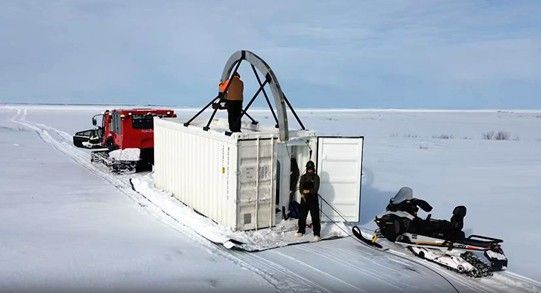
Project crews used a tracked vehicle to pull a specially made sled loaded with miles of fiber-optic cable, deploying it over the frozen tundra between Napaskiak and Eek.
Partnership at the Heart of Progress
From the outset, BNC and GCI approached this project as true partners. That partnership shaped everything — from the name of the network to the way we engaged with local communities. “AIRRAQ,” pronounced EYE-huck, is a Yup’ik word meaning “string that tells a story.” It’s a fitting metaphor for fiber strands carrying voices, images, and culture across Alaska and beyond. This wasn’t just a network built for the Y-K Delta; it was built with the Y-K Delta.
Community involvement was central. We held listening sessions in Tribal halls and school gyms, sometimes in Yup’ik, to ensure residents understood the project and had a voice in its design. That input guided construction, respected cultural priorities, and fostered local ownership. The result is a network that reflects the values and aspirations of the people it serves.
Commitment That Goes Beyond Connectivity
For GCI and the AIRRAQ Network, innovation isn’t just about technology – it’s about people. Our work in the Y-K Delta reflects a broader commitment to the communities we serve. When Typhoon Halong struck Western Alaska, and the communities AIRRAQ serves, in 2025, we didn’t hesitate. We mobilized emergency connectivity, equipment, volunteer, and financial support to help displaced families recover and rebuild.
We also invest in cultural and community institutions like KYUK, the region’s public media outlet. Through the AIRRAQ Network, we contributed $50,000 to KYUK’s fall fundraiser, bolstering its ability to deliver local news, Yup’ik language programming, emergency alerts, and cultural storytelling to more than 22,000 Alaskans. This contribution is about amplifying voices, preserving traditions, and ensuring that progress never comes at the expense of identity.
These efforts share the same foundation as the AIRRAQ Network: a belief that rural innovation must be rooted in respect, resilience, and relationships.
Impact That Lasts Generations
The benefits of the AIRRAQ Network extend far beyond faster speeds. It’s an economic multiplier, enabling job creation, workforce training, and new business opportunities. It’s a foundation for telehealth, distance learning, and cultural preservation. And it’s a step toward equity – ensuring that geography doesn’t dictate access to modern connectivity.
Phase two is already underway, with plans to connect additional communities in 2026. When all the AIRRAQ Network is complete, more than 11,800 Alaskans in 13 Y-K Delta communities will have access to world-class wireless and internet connectivity.
A Model for Rural Innovation
The AIRRAQ Network and GCI’s close partnership with BNC illustrates what rural innovation looks like in practice. It’s not about flashy headlines or quick wins. It’s about sustained commitment, authentic partnerships, and solutions tailored to the realities of the communities we serve.
It’s a reminder that innovation isn’t confined to urban centers or tech hubs. It can, and must, happen everywhere. Because when we connect rural America, we don’t just change how people communicate. We change what’s possible for generations to come.
To contribute content, please contact comms@ccamobile.org. (CCA members only.)